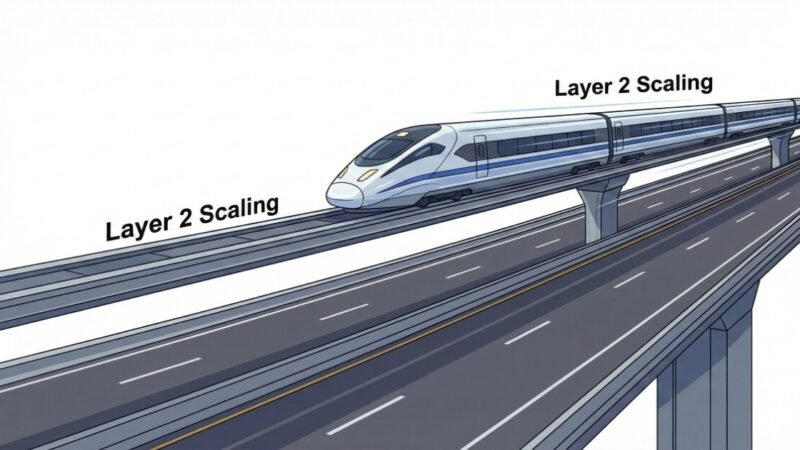
Base is an Ethereum layer 2 network built on the Optimistic Rollup stack, and exchanges operating on or integrating with Base follow different architectural patterns than standalone centralized venues. This article examines how trading infrastructure interacts with Base, the liquidity fragmentation you encounter, and the integration paths for practitioners building or using Base native exchange interfaces.
Base Network Characteristics That Affect Exchange Design
Base processes transactions through optimistic rollup mechanics. Transactions settle on Ethereum mainnet with a dispute window that historically ran seven days for withdrawals to L1, though fraud proof architectures evolve. Exchanges built on Base inherit these settlement constraints.
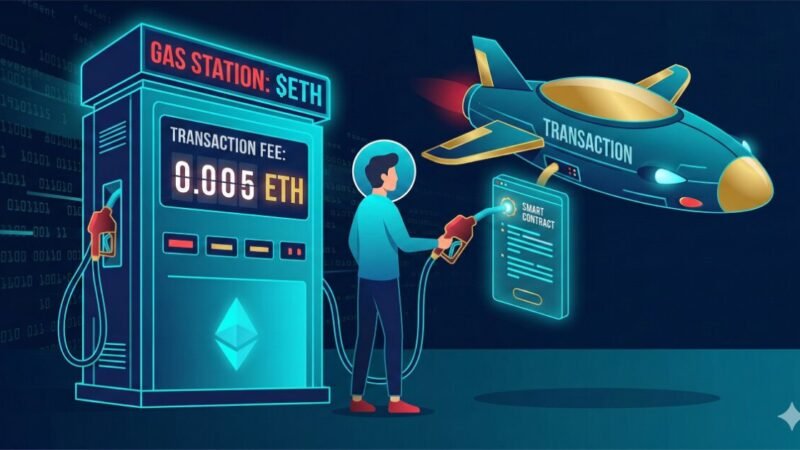
Block times on Base approximate two seconds. Gas fees denominate in ETH but typically cost a fraction of L1 equivalents due to batch posting. This fee structure makes frequent small trades economically viable where mainnet costs would prohibit them. Exchanges on Base can expose finer tick sizes and lower minimum order values without users incurring prohibitive execution costs.
The sequencer currently operates under centralized control by Coinbase, which sponsors Base. This introduces a dependency: if the sequencer halts or censors transactions, orderbook updates and settlement freeze until resolution. Decentralized exchanges on Base mitigate censorship through L1 escape hatches, but those paths reintroduce L1 gas costs and seven day delays.
Liquidity Architecture: Native vs Bridged Assets
Liquidity on Base exchanges falls into two categories. Native assets originate onchain through minting or deployment directly on Base. Bridged assets arrive via the canonical Base bridge or third party bridges from Ethereum or other chains.
Bridged ETH and ERC20 tokens carry wrapper contracts. When you trade USDC on Base, you interact with a bridged representation unless Coinbase has issued native USDC directly on the network. Verify the token contract address against official bridge documentation; scam tokens replicate ticker symbols but point to different addresses.
Orderbook depth for bridged assets depends on bridge TVL and arbitrage efficiency. If the price of bridged USDC on a Base DEX diverges from mainnet Curve pools, arbitrageurs bridge liquidity to capture the spread. This process takes time proportional to bridge finality plus gas cost recovery thresholds. During volatile periods, basis can widen beyond typical ranges.
Decentralized Exchange Primitives on Base
Automated market makers dominate Base DEX volume. Uniswap V3 and forks deploy the concentrated liquidity model: LPs specify price ranges, and swaps route through active ranges. When price exits all LP ranges, liquidity disappears and swaps fail or incur extreme slippage.
Swap routing on Base aggregates liquidity across multiple pools. A swap from ETH to an obscure token may route through ETH to USDC, then USDC to the target token. Each hop incurs a swap fee and slippage. Router contracts calculate optimal paths onchain or use offchain solvers that submit the path as calldata.
Fee tiers in Uniswap V3 style pools typically include 0.01%, 0.05%, 0.3%, and 1% options. Lower fee tiers concentrate around stablecoin pairs and correlated assets. Higher fee tiers compensate LPs for impermanent loss on volatile pairs. Choosing the wrong fee tier when providing liquidity fragments your position away from where swappers actually transact.
Centralized Venue Integration with Base
Centralized exchanges integrate Base through deposit and withdrawal pathways. When you deposit ETH to a CEX via Base, you send to a deposit address controlled by the exchange’s Base hot wallet. The exchange credits your account after confirming the transaction onchain, usually requiring a specific number of block confirmations.
Withdrawals reverse the flow. The exchange broadcasts a transaction from its hot wallet to your specified Base address. Withdrawal processing time depends on the exchange’s internal batching logic and security checks, not Base block time. Some venues batch withdrawals to amortize gas costs, even though Base gas is cheap.
Fiat onramps that support Base let you purchase crypto directly on the L2 without touching mainnet. This skips the bridge step and associated wait time. Verify whether the onramp delivers actual Base network tokens or simply credits an internal ledger that you must later withdraw.
Worked Example: Cross DEX Arbitrage on Base
Assume USDC trades at 0.00052 ETH on Base DEX A and 0.00051 ETH on Base DEX B. You hold 10,000 USDC on Base.
- Swap 10,000 USDC to ETH on DEX A. At 0.00052 ETH per USDC, you receive 5.2 ETH minus 0.3% swap fee (0.0156 ETH), netting 5.1844 ETH.
- Swap 5.1844 ETH to USDC on DEX B. At 0.00051 ETH per USDC, you receive 10,165.18 USDC minus 0.3% swap fee (30.5 USDC), netting 10,134.68 USDC.
- Profit: 134.68 USDC minus gas costs (roughly 0.0002 ETH or 0.39 USDC at current spot).
This example ignores slippage. On actual pools with finite liquidity, your 10,000 USDC swap moves the price. If DEX A has 50,000 USDC liquidity in the active range, your trade shifts the price enough to erode profit. Check pool depth before executing.
Common Mistakes and Misconfigurations
- Bridging to the wrong network. Users intending to use Base sometimes bridge to Optimism or Arbitrum. Token transfers to the wrong L2 require bridging back to L1 then re-bridging to Base, doubling time and fees.
- Approving unlimited token spend. DEX interfaces request ERC20 approvals. Unlimited approvals expose your full balance if the contract has a vulnerability. Set approvals to the exact swap amount or a reasonable ceiling.
- Ignoring slippage tolerance in volatile pairs. Default 0.5% slippage fails during rapid price movement. Your transaction reverts and you pay gas for nothing. Increase tolerance for illiquid or volatile pairs, but verify the output amount before signing.
- Providing liquidity outside active ranges. Depositing to a Uniswap V3 pool at a price range far from current spot earns no fees. Monitor current price and historical volatility to set ranges where volume actually occurs.
- Assuming instant L1 finality for withdrawals. Withdrawing from Base to Ethereum L1 requires waiting through the dispute window. If you need L1 liquidity urgently, keep a buffer on mainnet or use a fast bridge with additional trust assumptions.
- Confusing Base bridge addresses with third party bridges. Multiple bridges connect Base to other chains. Sending funds to an unofficial bridge contract may result in total loss. Use only the canonical bridge or widely audited third party options.
What to Verify Before You Rely on Base Exchanges
- Current dispute window duration for Base to L1 withdrawals. This parameter may change as fault proof systems mature.
- Token contract addresses for bridged assets. Compare against the official Base bridge interface or block explorer.
- DEX router contract versions. Forks and upgrades change routing logic and fee structures.
- Sequencer uptime and fallback mechanisms. Check whether the sequencer has experienced downtime and how quickly issues resolved.
- Gas fee trends on Base. While typically low, congestion spikes during high activity periods.
- LP incentive programs. Some DEXs offer additional token rewards for providing liquidity to specific pairs, changing effective yields.
- Regulatory status of centralized venues offering Base integration. Licensing and geographic restrictions vary by jurisdiction.
- Bridge TVL and utilization rates. Low TVL relative to demand creates bottlenecks during mass withdrawal events.
- Oracle dependencies for derivative exchanges. If a perp DEX on Base relies on Chainlink or another oracle, verify update frequency and deviation thresholds.
- Insurance fund capitalization for leveraged products. Some Base native derivatives platforms maintain insurance funds to cover liquidation shortfalls.
Next Steps
- Test small transactions on Base testnet to familiarize yourself with block times, gas costs, and bridge mechanics before moving significant capital.
- Set up a monitoring script to track price divergence across Base DEXs and between Base and L1 venues, identifying arbitrage opportunities that exceed gas and slippage costs.
- Evaluate whether your trading volume justifies maintaining liquidity on Base versus bridging per transaction, factoring in bridge wait times and costs against Base gas savings on repeated trades.
Category: Crypto Exchanges