Selecting a crypto exchange is an infrastructure decision that affects execution quality, counterparty risk, and operational overhead. The right platform depends on your trading volume, asset requirements, custody model preference, and regulatory constraints. This article establishes a decision framework for practitioners choosing between centralized exchanges (CEXs), decentralized exchanges (DEXs), and hybrid models.
Custody and Counterparty Risk Model
The custody model defines where assets sit during and between trades.
CEXs like Coinbase, Kraken, and Binance hold customer assets in pooled or segregated hot and cold wallets. You trust the exchange’s internal accounting, withdrawal queue management, and solvency. The platform controls private keys. Benefits include fiat onramps, high liquidity for major pairs, and margin products. Risks include insolvency (FTX demonstrated that user balances can be commingled with corporate funds), regulatory seizure, and withdrawal freezes.
DEXs like Uniswap, dYdX v4, and Jupiter execute trades without custodying assets. You retain key control until the moment of settlement. Onchain DEXs settle via smart contracts; the contract logic is auditable but carries execution risk (reentrancy, oracle manipulation). Hybrid models like dYdX v3 combined offchain order matching with onchain settlement, splitting trust assumptions.
The choice turns on whether you value capital efficiency and fiat integration (CEX) or eliminate custodial counterparty risk at the cost of higher gas fees and limited fiat access (DEX).
Liquidity Depth and Execution Quality
Liquidity depth determines slippage and whether you can execute size without moving the market.
For CEXs, check the order book depth at 0.1%, 0.5%, and 1% from mid price for your target pairs. Binance and Coinbase typically dominate BTC/USD and ETH/USD depth. For altcoins, compare across platforms using aggregators or direct API queries. Market makers concentrate liquidity where volume is highest, creating network effects.
For DEXs, liquidity lives in automated market maker (AMM) pools or onchain limit order books. Uniswap v3 concentrated liquidity allows LPs to allocate capital within price ranges, improving depth near current price but creating gaps during volatility. Curve optimizes for stablecoin pairs with low slippage. Check total value locked (TVL) in the specific pool, not protocol-wide TVL. A pool with $500k TVL will exhibit materially higher slippage than one with $50m on the same trade size.
Measure execution quality by comparing quoted price to filled price across order sizes. Simulate a 10 ETH market buy and compare effective price against multiple venues.
Fee Structure and Maker-Taker Dynamics
Fee models vary by platform and user tier.
CEXs use maker-taker schedules tied to 30 day volume. Maker orders (limit orders that add liquidity to the book) typically pay 0.00% to 0.10%. Taker orders (market orders that remove liquidity) range from 0.02% to 0.20%. High volume accounts (above $10m monthly) negotiate custom rates. Some platforms discount fees when paid in a native token (Binance BNB, FTX FTT historically).
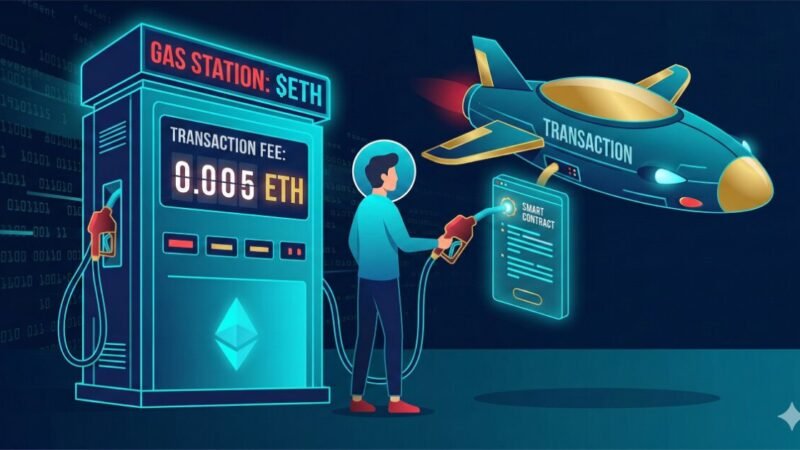
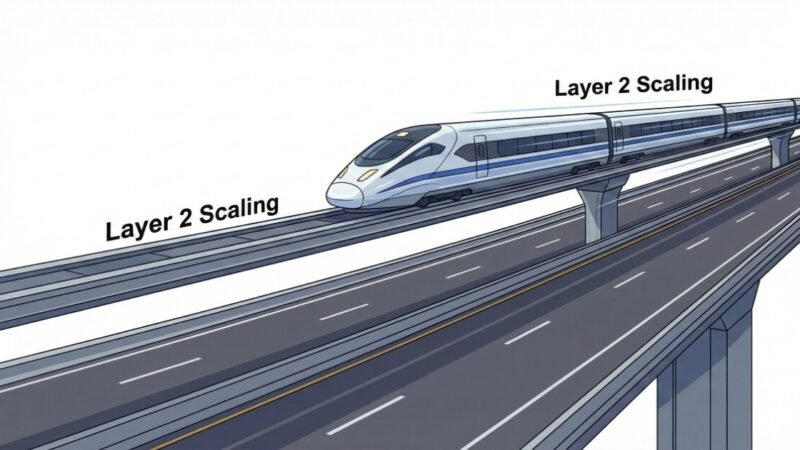
DEXs charge protocol fees (often 0.05% to 0.30% per swap) paid to liquidity providers, plus network gas fees. Gas costs vary by chain: Ethereum mainnet can exceed $20 per swap during congestion; Layer 2s like Arbitrum and Optimism drop this to under $0.50. For trades under $1,000, gas fees can dominate total cost on Ethereum.
Calculate breakeven trade size. If you pay a $15 gas fee on a DEX versus 0.10% taker fee on a CEX, the CEX is cheaper below $15,000 notional. Above that threshold, the flat gas fee becomes favorable.
Regulatory Jurisdiction and Asset Availability
Regulatory status determines which assets you can trade and whether you can access the platform at all.
US registered exchanges (Coinbase, Kraken, Gemini) limit token listings to assets that legal counsel deems unlikely to be securities under Howey test analysis. Expect BTC, ETH, LTC, and select others. Offshore platforms list hundreds of tokens but restrict US IP addresses or require VPN workarounds that violate terms of service.
DEXs are geographically neutral at the protocol level but may geoblock frontend access. The smart contract remains permissionless; you can interact directly via Etherscan or a local frontend deployment.
If you require access to newly launched tokens, low cap alts, or derivatives not approved in your jurisdiction, you face a choice: accept offshore CEX counterparty risk, use a DEX and pay gas overhead, or remain constrained to compliant venues.
API Access and Order Types
Programmatic traders need reliable APIs and advanced order types.
CEX APIs offer REST endpoints for market data and account management, plus WebSocket feeds for real-time order book updates. Rate limits vary: Binance allows 1,200 requests per minute on certain endpoints; Coinbase Pro enforces stricter limits. Check whether historical trade data is available and how far back.
Order type support differs. Most CEXs support limit, market, stop loss, and stop limit orders. Some add iceberg orders (display only a fraction of total size), post-only flags (reject if order would take liquidity), and time-in-force options (immediate-or-cancel, fill-or-kill, good-til-cancelled).
DEXs expose fewer order types. Uniswap v2 and v3 are pure AMMs with no limit orders; you swap at current pool price. Protocols like dYdX and Vertex offer onchain or hybrid limit order books with stop losses and conditional orders, bridging the gap.
Evaluate API uptime history. Check status pages and third party monitors for historical downtime during volatility spikes. Exchanges have halted trading or experienced API outages during rapid market moves.
Worked Example: Choosing a Platform for a $50k ETH/USDC Arbitrage Loop
You identify a recurring arbitrage opportunity: ETH trades $2 cheaper on Kraken than Coinbase during US morning hours. You plan to execute 10 round trips per day at $50k notional each.
On Kraken and Coinbase, assuming you qualify for 0.05% maker and 0.15% taker fees, each round trip (buy on Kraken, sell on Coinbase) costs:
– Kraken buy: $50,000 × 0.0015 = $75
– Coinbase sell: $50,000 × 0.0015 = $75
– Total: $150 per loop, $1,500 daily
Your spread is $2 per ETH. At $2,500/ETH, you trade 20 ETH per loop, capturing $40 gross per loop or $400 daily. Fees consume $1,500, leaving you $1,100 negative. The opportunity is uneconomical at this fee tier.
If you maintain $15m in 30 day volume, you might reduce fees to 0.00% maker, 0.05% taker. New cost: $50,000 × 0.0005 = $25 per leg, $50 per loop, $500 daily. Now you net $400 gross minus $500 fees, still negative.
The arbitrage only works if spreads widen to $3+ or you negotiate a rebate for adding liquidity. Alternatively, using a DEX introduces $10 gas per swap on a Layer 2. Four swaps (Kraken to wallet, wallet to DEX, DEX swap, wallet to Coinbase) cost $40 in gas plus 0.30% DEX swap fee ($150), totaling $190 per loop. Still unprofitable unless spreads exceed $10.
Common Mistakes and Misconfigurations
- Ignoring withdrawal fee structures: CEXs charge fixed network fees (e.g., 0.0005 BTC) that can exceed on-chain miner fees by 3x to 10x. Consolidating withdrawals reduces per-transfer cost.
- Assuming all stablecoin pairs are equivalent: USDT, USDC, and DAI pairs have different liquidity and regulatory risk. Tether has historically faced banking challenges; its depeg risk differs from Circle’s USDC.
- Overlooking IP geofencing on VPN usage: Using a VPN to access a restricted platform may trigger account closure and fund freezes, regardless of your actual location.
- Failing to test API key permissions: Overly permissive keys (withdrawal enabled) create catastrophic risk if leaked. Use separate keys for trading versus withdrawal and store withdrawal keys offline.
- Neglecting to monitor exchange solvency signals: Pausing withdrawals, disabling certain pairs, or leadership changes are early warning signs. Exchanges rarely announce insolvency before freezing assets.
- Defaulting to market orders during volatility: Wide spreads during rapid price moves can cause 5% to 10% slippage on market orders. Limit orders with aggressive pricing reduce execution risk.
What to Verify Before You Commit Capital
- Current maker and taker fee schedule for your anticipated volume tier and whether fees are discounted by native token holdings
- Withdrawal processing time and whether the platform batches transfers or processes individually (affects time to off-platform custody)
- Supported networks for each token (e.g., whether USDT withdrawals support Ethereum, Tron, or both, and associated fees)
- Proof of reserves or attestation reports published by the exchange, and whether liabilities are also disclosed
- Regulatory licenses held in your jurisdiction and whether the platform has faced enforcement actions or restrictions
- API rate limits, historical uptime, and whether WebSocket feeds include full order book depth or only top-of-book
- Insurance or compensation fund details, including coverage limits and what scenarios qualify (exchange hack versus insolvency)
- KYC and AML requirements, including documentation turnaround time and whether trading is enabled before full verification
- Onchain contract audit reports for DEXs, focusing on high and critical findings and whether they have been resolved
- Gas fee estimator accuracy for DEXs and whether the frontend includes slippage protection defaults
Next Steps
- Simulate your most common trade types across three candidate platforms, measuring execution price, fees, and time to settlement. Use testnet or minimum viable amounts.
- Set up API access and withdrawal address whitelisting on your selected CEX before you need emergency liquidity. Test a small withdrawal to confirm the flow.
- For DEX usage, deploy a transaction simulation tool (Tenderly, Ganache fork) to preview swap outcomes and gas costs before mainnet execution. Adjust slippage tolerance based on pool depth and volatility regime.
Category: Crypto Exchanges