Choosing a crypto exchange requires evaluating technical architecture, liquidity mechanics, custody models, and fee structures. This article provides a decision framework for comparing spot exchanges, focusing on execution quality, counterparty risk, and operational trade-offs that affect high volume traders, market makers, and firms managing treasury operations.
Custody and Settlement Architecture
Exchanges fall into three custody models, each with distinct risk and control profiles.
Centralized custodial exchanges hold your private keys. You deposit assets to an exchange controlled wallet, trade against an internal order book, and withdraw when you need onchain settlement. Execution happens instantly because trades settle in the exchange’s internal database. Coinbase, Kraken, and Binance use this model. Your counterparty risk is the exchange itself: insolvency, hack, or regulatory seizure affects all custodied funds.
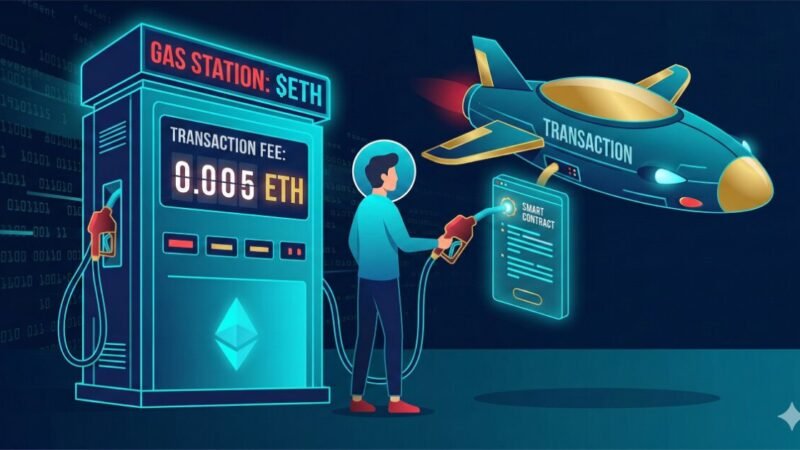
Noncustodial DEX aggregators route orders to onchain liquidity sources. You retain custody throughout the trade. Settlement happens atomically in a single transaction or fails completely. Execution speed depends on block time and network congestion. Gas fees apply to every trade. 1inch and Matcha aggregate across multiple DEX protocols to find optimal routing.
Hybrid models combine offchain order matching with onchain settlement checkpoints. dYdX v3 matched orders offchain but settled positions to Ethereum (later StarkEx) periodically. This reduces per trade gas costs while maintaining cryptographic proof of reserves. The tradeoff: you trust the operator to match orders fairly and publish state roots honestly until settlement occurs.
Liquidity Depth and Execution Quality
Order book depth determines your slippage on mid to large orders. Evaluate three metrics when comparing liquidity.
Bid ask spread shows the cost of immediate execution. For BTC/USDT pairs, top tier exchanges maintain spreads below 0.01% during normal market conditions. Wider spreads indicate fragmented liquidity or lower trading volume. Check spreads at your typical trade size, not just the top of book.
Order book depth at percentage intervals reveals how much size you can execute before moving the market. Compare the volume available within 0.1%, 0.5%, and 1% of mid price across exchanges. A deep book at 0.1% matters for execution quality even if you rarely trade that size, because it constrains market impact.
24 hour volume correlates with depth but lags during volatility. An exchange might show strong daily volume but have thin books during your preferred trading hours. Time zone matters: Asian trading sessions concentrate liquidity on certain exchanges, US hours on others.
Fee Structures and Rebate Programs
Most exchanges use maker taker fee schedules that vary by 30 day volume tier. Understanding the breakpoints matters for cost optimization.
Maker fees reward limit orders that add liquidity to the book. Taker fees apply to market orders that remove liquidity. At low volume tiers, expect 0.1% to 0.4% taker fees. Maker fees start near taker rates but often become negative (rebates) at higher tiers.
The volume threshold where maker fees turn negative varies widely. Some exchanges offer maker rebates above $10M in 30 day volume, others above $100M. If your volume crosses a tier boundary, calculate whether consolidating trades to one exchange saves more in fee reductions than you lose from slightly worse execution on that venue.
Staking or holding exchange tokens sometimes reduces fees by 10% to 25%. Calculate the opportunity cost: the yield you forgo by holding the token rather than deploying that capital elsewhere. Token holdings also create price risk if the token devalues relative to your base currency.
API Rate Limits and Connectivity
Programmatic traders need reliable API access with sufficient rate limits for their strategy.
REST API limits typically apply per IP address or API key, measured in requests per second or per minute. Market data endpoints often have higher limits than trading endpoints. Verify whether order placement, cancellation, and order status checks share a rate limit bucket or have separate allowances.
WebSocket feeds provide real time order book updates and trade execution notifications. Latency varies by exchange infrastructure and your geographic proximity to their servers. Exchanges with colocated or proximity hosted API gateways offer single digit millisecond latency; cloud based infrastructure typically adds 20 to 100 milliseconds depending on region.
Order types affect execution control. All major exchanges support limit and market orders. Stop loss and stop limit availability varies. Some exchanges offer iceberg orders (show partial size), post only flags (reject if order would take), and good til cancel versus immediate or cancel time in force options. Market makers rely on post only to avoid paying taker fees accidentally.
Regulatory Jurisdiction and Operational Risk
The exchange’s legal domicile determines which assets it lists, which users it accepts, and how it responds to regulatory pressure.
US regulated exchanges comply with state money transmitter licenses and often federal registration requirements. They delist assets that might be classified as securities, implement strict KYC, and respond to law enforcement requests. They offer fewer trading pairs but stronger legal recourse if disputes arise.
Offshore exchanges domiciled in jurisdictions with lighter crypto regulation list broader asset selections including smaller cap tokens. They may accept users from regions blocked by US exchanges. Regulatory risk cuts both ways: lighter oversight means more trading freedom but less protection if the exchange exits scams or loses customer funds.
Proof of reserves attestations provide periodic verification that an exchange holds enough assets to cover user balances. These attestations vary in rigor from self reported wallet addresses to third party audits with Merkle tree verification. Neither guarantees solvency since liabilities might exceed disclosed assets, but transparent reserve reporting is better than opacity.
Worked Example: Execution Cost Comparison
You need to sell 10 BTC for USDT. Current mid market price is 42,000 USDT per BTC. You compare three venues.
Exchange A shows 8 BTC of bids within 0.1% of mid (41,958 or higher), another 15 BTC within 0.2%. Your 10 BTC order would clear the first level and execute partial size at 41,916 (0.2% below mid). Taker fee is 0.15%. Estimated proceeds: 10 BTC × 41,970 average fill × (1 minus 0.0015) = 419,071 USDT.
Exchange B has 25 BTC of bids within 0.1%, deeper liquidity. Average fill price 41,980. Taker fee is 0.20%. Proceeds: 10 BTC × 41,980 × (1 minus 0.0020) = 419,216 USDT.
Exchange C offers 0.08% taker fee due to your volume tier but thinner liquidity: only 4 BTC within 0.1%, average fill 41,940. Proceeds: 10 BTC × 41,940 × (1 minus 0.0008) = 419,064 USDT.
Exchange B delivers the best net execution despite higher percentage fees because liquidity depth dominates. For smaller orders, Exchange C’s low fee might win. Always model at your actual trade size.
Common Mistakes and Misconfigurations
-
Using market orders during low liquidity periods. Spread widens during overnight hours or volatility spikes. A market order intended to execute near mid can fill 1% to 3% worse than displayed prices if the book is thin.
-
Ignoring withdrawal fee structures. Some exchanges charge flat fees per withdrawal (e.g., 0.0005 BTC regardless of amount), others use percentage based fees. Consolidating small balances before withdrawing saves significantly on flat fee venues.
-
Assuming API order timestamps reflect exchange matching time. Your local timestamp shows when you sent the order. The exchange’s matching engine timestamp determines priority. Latency between these timestamps matters for price sensitive strategies.
-
Failing to test API error handling under rate limit conditions. Exchanges return different HTTP status codes and error messages when you exceed limits. Some queue excess requests, others reject them immediately. Your reconnection logic must handle both patterns.
-
Overlooking forced liquidation mechanics for margin products. Even on spot exchanges offering margin, liquidation price calculations and margin call notifications vary. Some exchanges liquidate entire positions, others liquidate incrementally.
-
Not verifying withdrawal address whitelisting requirements. Some exchanges require 24 to 48 hour delay before withdrawing to newly added addresses. Plan ahead for time sensitive withdrawals.
What to Verify Before Committing to an Exchange
- Current maker and taker fee schedules at your expected volume tier, including any token holding discounts or staking requirements.
- Withdrawal fees for each asset you plan to trade, and whether fees are flat or percentage based.
- Supported order types and time in force options for your strategy’s execution requirements.
- API rate limits broken down by endpoint category (market data, trading, account management).
- Geographic restrictions that might affect your access, especially if you use VPNs or travel frequently.
- Margin and leverage terms if you plan to trade beyond spot, including liquidation fee percentages.
- Latest proof of reserves attestation date and methodology if the exchange publishes them.
- Deposit and withdrawal processing times for your primary assets, especially during network congestion.
- Customer support response time benchmarks from other users in your jurisdiction.
- Insurance fund size or user protection policies in case of exchange hack or insolvency.
Next Steps
- Calculate your typical 30 day volume and map it to fee tiers on three candidate exchanges to identify the lowest cost venue for your profile.
- Place small test orders on each exchange to measure API latency, order book depth accuracy, and withdrawal processing time before committing significant capital.
- Set up real time monitoring for order book depth at your typical trade size on your chosen exchanges to identify when liquidity conditions favor routing to an alternate venue.
Category: Crypto Exchanges