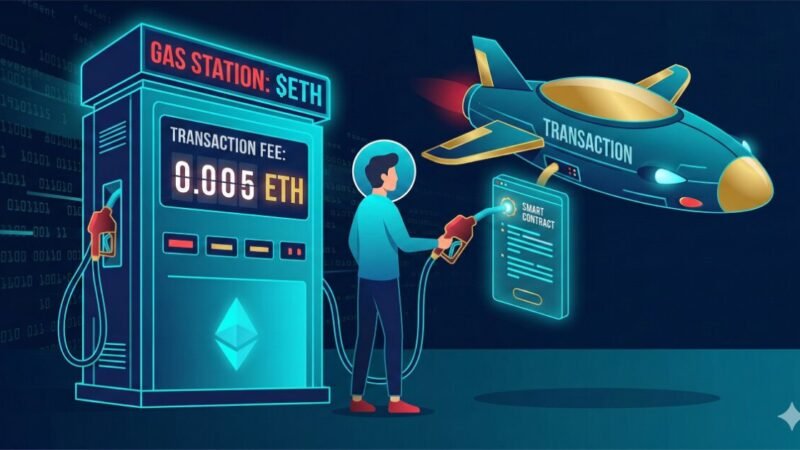
When trading volume scales or rebalancing frequency increases, exchange fees become a dominant cost component. A centralized exchange charging 0.25% per side extracts 0.50% round trip, which compounds across hundreds of trades per month. This article examines the mechanical differences between low cost exchanges, the hidden costs that offset headline fee rates, and the decision framework for matching an exchange to your trading pattern.
Fee Structure Mechanics
Most exchanges publish a maker/taker schedule that reduces rates as 30 day volume increases. Maker fees apply when your limit order adds liquidity to the order book. Taker fees apply when you remove liquidity with a market order or marketable limit order. A typical tier structure might start at 0.10% maker / 0.15% taker for accounts under $50,000 in monthly volume, dropping to 0.02% / 0.05% above $10 million.
The distinction matters for execution strategy. If you primarily use market orders for immediate fills, your effective cost is the taker rate. Traders willing to post passive limit orders and wait for fills can capture the maker rate, and some exchanges offer maker rebates (negative fees) at high volume tiers. A rebate of negative 0.01% pays you $10 per million dollars of maker volume.
Volume calculations vary. Some platforms aggregate spot and derivative volume into a single tier. Others segment them. Some count volume in USDT equivalents, others in the platform’s native token. Confirm whether withdrawals, deposits, or failed orders count toward the threshold.
Native Token Discounts and Lockup Dynamics
Many exchanges offer fee reductions when you hold or pay fees in their native token. Binance BNB, for example, historically provided a 25% discount on trading fees when users opted to pay in BNB rather than the trading pair’s quote currency. Similar programs exist on other platforms.
The economic tradeoff involves exposure to the token’s price volatility. If you hold $10,000 in a native token to access a 25% fee discount, you are long that token’s performance against your base currency. During the 2021 to 2022 period, several exchange tokens declined 60% to 80% from peak values, erasing years of accumulated fee savings.
Lockup mechanisms add complexity. Some platforms require staking the native token for 30 to 90 day periods to activate fee discounts. This introduces liquidity risk. If the exchange experiences a security incident or regulatory action during the lockup window, you cannot exit the position.
Calculate the break even threshold. If you save $50 per month in fees by holding $5,000 in a native token, your annual savings is $600, or 12% yield. Compare this to the token’s historical volatility and your opportunity cost.
Withdrawal Fee Asymmetries
Listed trading fees describe only the execution cost. Withdrawal fees often exceed trading fees for small position sizes. An exchange might charge 0.0005 BTC to withdraw Bitcoin, equivalent to $30 at certain price levels. For a $500 position, this represents a 6% exit cost.
Withdrawal fees vary by asset and network. Withdrawing USDT on Tron typically costs $1, while the same withdrawal on Ethereum mainnet might cost $10 to $25 depending on gas prices. Some exchanges subsidize withdrawals for high volume accounts or waive fees entirely for specific tokens.
Internalized transfers between users on the same exchange bypass blockchain fees entirely. If both counterparties maintain accounts on the same platform, settlement is instantaneous and free. This creates network effects that favor larger exchanges for frequent traders.
Order Book Depth and Slippage Costs
A low fee schedule means little if insufficient liquidity forces you to cross wide spreads. An exchange charging 0.05% in fees but offering a 0.20% bid/ask spread on your trading pair costs more than a competitor charging 0.15% with a 0.05% spread.
Measure effective cost by analyzing actual fill prices against mid market rates at the time of execution. For a $10,000 market buy order, record the volume weighted average price you received and compare it to the midpoint of the best bid and offer when you submitted the order. The difference, plus the explicit fee, is your total cost.
Exchanges with lower headline fees sometimes attract less liquidity, widening spreads and increasing slippage on larger orders. This inverse relationship holds particularly for altcoin pairs with lower overall trading volume. A tier one exchange might charge 0.10% but fill your 50 ETH order within 0.05% of mid market. A budget platform charging 0.03% might move the market 0.30% on the same order.
Worked Example: Cost Comparison Across Execution Patterns
Consider a trader executing $100,000 in monthly volume split between BTC/USDT and ETH/USDT. Pattern A uses market orders exclusively. Pattern B uses limit orders with 70% fill rate.
Exchange X: 0.08% taker, 0.05% maker, no native token discount, 0.0005 BTC withdrawal fee
Exchange Y: 0.15% taker, 0.10% maker, 20% discount with native token held, 0.0003 BTC withdrawal fee
Pattern A on Exchange X: $100,000 × 0.08% = $80 in fees, plus one $30 withdrawal = $110 total
Pattern A on Exchange Y with discount: $100,000 × 0.15% × 0.80 = $120, plus one $18 withdrawal = $138 total
Pattern B on Exchange X: $70,000 × 0.05% + $30,000 × 0.08% = $35 + $24 = $59 in fees, plus $30 withdrawal = $89 total
Pattern B on Exchange Y with discount: $70,000 × 0.10% × 0.80 + $30,000 × 0.15% × 0.80 = $56 + $36 = $92, plus $18 withdrawal = $110 total
The maker/taker split and execution strategy shift the cost ranking between platforms. Add slippage analysis to complete the picture.
Common Mistakes and Misconfigurations
- Chasing the lowest headline fee without calculating total cost including spreads, slippage, and withdrawal fees for your actual trade sizes and frequency
- Holding native tokens for fee discounts without hedging the price exposure or calculating the volatility adjusted cost
- Ignoring volume tier reset schedules that drop you to higher fee brackets at month end if you front loaded trading activity
- Withdrawing small amounts frequently instead of batching to amortize fixed withdrawal fees across larger transfers
- Assuming maker rebates apply to all limit orders when many exchanges require the order to rest in the book for a minimum duration before qualifying
- Using API keys with fee discount eligibility without verifying the discount applies to programmatic orders, not just manual web interface trades
What to Verify Before Selecting an Exchange
- Current fee schedule and volume tier thresholds, as platforms adjust these in response to competition and market conditions
- Whether spot and derivative volume aggregate for tier calculation or segment separately
- Native token discount percentage, lockup requirements, and withdrawal restrictions during staking periods
- Withdrawal fee list for each asset and supported network, checking whether fees are fixed in token terms or fiat equivalent
- Order book depth for your specific trading pairs at your typical order sizes using live snapshots during your active trading hours
- Geographic restrictions and verification requirements that might lock your account or funds during compliance reviews
- Insurance fund size and coverage terms for exchange insolvency or security breach scenarios
- API rate limits and whether they differ between fee tiers or account types
- Fiat onramp and offramp options if you need to move between traditional banking and crypto without using a second platform
- Historical uptime and performance during high volatility periods when you most need execution access
Next Steps
- Log actual execution costs for your past 30 days of trading including explicit fees, slippage, and withdrawal costs to establish a baseline
- Request API access to two or three candidate low cost exchanges and execute small test orders to measure real slippage and fill quality
- Build a spreadsheet model that calculates monthly costs across platforms given your volume profile, maker/taker ratio, and withdrawal frequency to identify the true lowest cost option for your specific pattern
Category: Crypto Exchanges