Selecting a crypto exchange is a system architecture decision. The exchange you choose determines your liquidation engine, custody model, API surface, and counterparty risk profile. This article covers the technical and operational factors that matter when evaluating exchanges for trading, custody, or both, with a framework for matching platform characteristics to your specific requirements.
Custody Model and Key Management
Exchanges operate on three custody models: noncustodial orderbooks (rare), custodial spot and derivatives (most centralized exchanges), and hybrid models where settlement happens onchain but the orderbook is centralized.
Custodial exchanges hold your private keys. You deposit funds to an address controlled by the exchange, and your balance becomes a database entry. Withdrawals require the exchange to sign and broadcast a transaction on your behalf. This introduces platform risk: the exchange can freeze your account, suffer a security breach, or become insolvent. In return, you get faster execution, lower gas costs on trades, and access to derivatives with leverage.
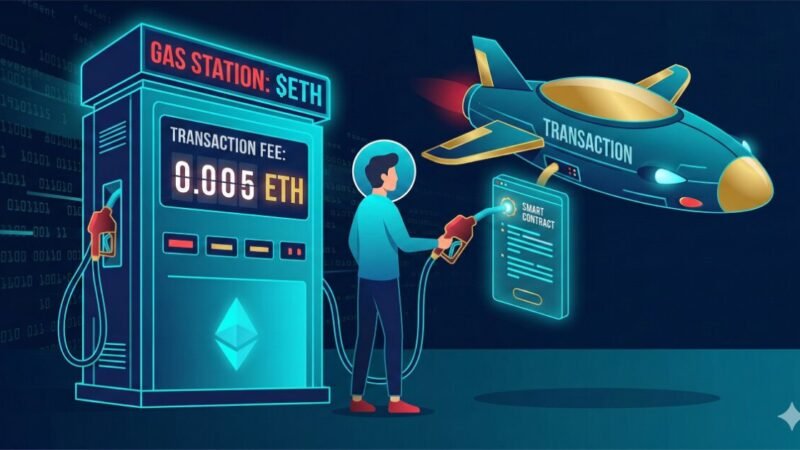
Noncustodial exchanges (true DEXs) never take custody. You sign each trade from your own wallet, and settlement happens onchain via smart contracts. Gas fees apply to every transaction. Slippage and MEV extraction are execution risks. The tradeoff is elimination of platform custody risk and censorship resistance.
Hybrid models like those used by some Layer 2 exchanges offer custodial trading with periodic batch settlement to a blockchain. You deposit to the platform, trade offchain with low latency, and can withdraw to the base layer. The security model depends on the frequency and mechanism of settlement proofs.
Your choice depends on trade frequency, position size, and risk tolerance. High frequency traders and market makers typically accept custodial risk for sub millisecond execution. Long term holders who trade infrequently can absorb gas costs and use noncustodial infrastructure.
Order Matching Engine and Execution Quality
The matching engine determines fill quality, latency, and available order types. Centralized exchanges run proprietary matching engines, usually based on price time priority or pro rata allocation. Key specifications to evaluate include order processing throughput (orders per second), latency between order submission and acknowledgment (typically 1 to 50 milliseconds for major exchanges), and supported order types.
Market and limit orders are universal. More sophisticated traders need stop loss, stop limit, iceberg (hidden size), post only (maker only), fill or kill, and immediate or cancel orders. Derivatives platforms should support reduce only orders to prevent position flipping during liquidation and bracket orders for automated profit taking and stop placement.
Execution quality shows up in fill rates and price improvement. Measure this by comparing your fills to the mid price at order timestamp over a sample of trades. Exchanges with deep liquidity and tight spreads deliver better execution, particularly for larger orders. Some platforms offer smart order routing across multiple liquidity pools, though this adds latency.
Request API documentation before committing. Check supported authentication methods (API keys, OAuth, IP whitelisting), rate limits per endpoint, and whether WebSocket feeds are available for order book and trade streams. REST API rate limits for order placement typically range from 10 to 100 requests per second depending on account tier.
Liquidity Depth and Market Structure
Liquidity determines slippage on market orders and the spread you pay on limit orders. Evaluate liquidity by examining the order book depth at multiple price levels. A useful metric is the cost to move the market by 1% (the amount you would need to buy or sell to shift the mid price by 1%).
For major pairs like BTC/USDT or ETH/USDT, leading exchanges maintain order books with millions of dollars within 0.1% of mid on each side. For altcoin pairs, liquidity fragments across exchanges. Check 24 hour volume, but recognize that wash trading inflates this number on some platforms. The order book snapshot is harder to fake.
Market maker programs and liquidity mining influence depth. Exchanges that rebate maker fees or pay liquidity providers in platform tokens typically show tighter spreads. However, these incentives can disappear suddenly, causing liquidity to migrate.
For derivatives, open interest matters as much as volume. High open interest with low volume suggests position accumulation or low turnover. High volume with low open interest indicates speculative activity or positions opening and closing rapidly. Examine funding rates on perpetual futures to gauge market sentiment and the cost of holding leveraged positions.
Fee Structure and Rebate Programs
Fee schedules have multiple dimensions. Taker fees (removing liquidity with market orders) typically range from 0.02% to 0.10% on centralized exchanges. Maker fees (adding liquidity with limit orders) range from 0% to 0.05%, with many platforms offering maker rebates (negative fees) at higher volume tiers.
Volume based tiering adjusts fees monthly or daily based on 30 day trailing volume. Some exchanges measure volume in USD equivalent, others in BTC or the platform token. Holding the platform token may reduce fees or unlock higher rebate tiers, but this introduces basis risk if the token depreciates.
Withdrawal fees vary by asset. Bitcoin withdrawals typically cost 0.0002 to 0.001 BTC regardless of amount. ERC20 withdrawals reflect current gas prices, and some exchanges socialize this cost (flat fee) while others pass through actual gas cost. Check whether the exchange batches withdrawals, which reduces individual cost but adds delay.
Derivatives platforms charge funding rates on perpetual contracts every 8 hours. These rates compensate the side providing price convergence (longs pay shorts when futures trade above spot, shorts pay longs when below). Funding rates typically range from negative 0.05% to positive 0.05% per period but can spike during volatility. Factor this into the cost of holding leveraged positions overnight.
Regulatory Status and Jurisdiction
Exchange jurisdiction determines regulatory oversight, user protections, and asset availability. Exchanges registered with financial regulators in major jurisdictions typically implement KYC verification, transaction monitoring, and proof of reserves. This reduces but does not eliminate platform risk.
Offshore exchanges in jurisdictions with minimal regulation often offer higher leverage, more asset pairs, and fewer restrictions on account activity. The tradeoff is limited legal recourse if the platform becomes insolvent or freezes withdrawals.
Verify the exchange’s registration status before depositing funds. In the United States, look for FinCEN MSB registration and state money transmitter licenses. In the European Union, check for MiFID authorization or e money licenses. Exchanges claiming regulatory compliance sometimes hold only basic registrations that do not include customer fund protections.
Geographic restrictions change over time. Exchanges delist assets or block users from specific jurisdictions in response to enforcement actions. If you require access to particular assets or derivatives, confirm current availability for your jurisdiction directly with the exchange.
Worked Example: Selecting an Exchange for Market Making
A market making firm needs to choose an exchange for a BTC/USDT strategy with the following requirements: 100 updates per second to orders on each side, sub 10 millisecond order acknowledgment latency, maker rebates on at least 80% of volume, and ability to withdraw 50 BTC daily without manual review.
The firm evaluates four exchanges. Exchange A offers 200 orders per second via REST API, 5 millisecond median latency, 0.01% maker rebate at $10M monthly volume, and 100 BTC daily auto withdrawal limit. Exchange B provides WebSocket order placement with 2 millisecond latency but only 50 orders per second, 0.015% rebate at $5M volume, and 20 BTC daily limit with manual review required above that.
Exchange C has 150 orders per second capacity, 8 millisecond latency, 0.008% rebate at $15M volume, and 50 BTC auto withdrawal. Exchange D offers 300 orders per second, 3 millisecond latency, but zero rebate (0.00% maker fee) regardless of volume, and 200 BTC withdrawal limit.
The firm selects Exchange A. The order rate and latency meet requirements, the rebate threshold is achievable with projected volume, and the withdrawal limit matches daily needs. Exchange D has better infrastructure but the lack of rebates costs roughly $10,000 monthly at expected volume. Exchange B’s withdrawal friction would require splitting funds across hot and cold wallets with operational overhead. Exchange C barely meets the order rate requirement with no headroom for growth.
Common Mistakes and Misconfigurations
-
Assuming order book depth from aggregator data. Aggregators show consolidated liquidity but cannot guarantee fills across exchanges simultaneously. Always check the native order book for the platform where you will execute.
-
Ignoring WebSocket reconnection logic. Production systems need automatic reconnection with gap detection and order book resync. Dropped connections without proper recovery cause stale data and incorrect position calculations.
-
Miscalculating net fees with token holdings. Fee discounts from holding platform tokens require maintaining a balance, which creates opportunity cost and price risk. Calculate the breakeven point where fee savings exceed the cost of capital and volatility drag.
-
Using market orders without checking recent execution quality. Market orders on low liquidity pairs can slip multiple percentage points. Always inspect recent trade history and order book depth before placing market orders above a threshold size.
-
Setting withdrawal addresses without testing small amounts first. Incorrect address formats or network selection (sending ERC20 USDT to a TRC20 address) result in permanent loss. All exchanges allow custom withdrawal addresses, so test with minimal amounts before bulk transfers.
-
Relying on displayed leverage limits without checking maintenance margin. Advertised leverage (100x, 125x) differs from sustainable leverage. Maintenance margin requirements determine actual liquidation risk. A position at 50x with 2% maintenance margin liquidates with a 2% adverse move, not 50%.
What to Verify Before You Rely on This
- Current API rate limits and endpoint availability for your account tier. Rate limits change and may differ from documentation.
- Actual maker and taker fees for your projected volume bracket. Verify whether volume includes derivatives or only spot.
- Withdrawal processing times and daily limits by asset. Some exchanges batch withdrawals at fixed intervals rather than processing continuously.
- Whether the exchange operates fractional reserve or maintains proof of reserves with third party attestation. Check the date of the most recent attestation.
- Supported order types for each trading pair. Not all pairs support all order types, particularly on newer or lower volume markets.
- Settlement times for derivatives. Perpetual funding occurs at specific intervals. Futures settlement may happen daily, weekly, or quarterly depending on contract specs.
- Insurance fund size and liquidation engine mechanics for derivatives platforms. Understand whether socialized losses can occur if the insurance fund depletes.
- Current regulatory status in your jurisdiction. Enforcement actions and geographic blocks can happen with minimal notice.
- Dependency on stablecoins for settlement. If the exchange uses USDT or USDC as quote currency, evaluate the stablecoin risk separately.
- Cold storage percentage and custody arrangements disclosed in terms of service or security documentation.
Next Steps
- Open accounts on three candidate exchanges and test deposit, trade, and withdrawal flows with small amounts to evaluate actual latency and user experience against specifications.
- Build a spreadsheet model comparing net fees including rebates, token holdings, and withdrawal costs across your expected trading volume and asset mix.
- Set up monitoring for order execution quality by logging timestamps and fill prices, then compare against order book snapshots to measure slippage and latency in production conditions.
Category: Crypto Exchanges