A decentralized crypto exchange (DEX) is a protocol or set of smart contracts that enables peer to peer token trading without a centralized custodian or order matching engine. Instead of depositing assets into an exchange controlled wallet, traders interact directly with onchain liquidity pools or settlement contracts. This article examines the core mechanisms, design trade-offs, and operational realities that distinguish DEXs from traditional exchange architectures.
Core Settlement Architecture
DEXs execute trades by invoking smart contracts that atomically swap tokens between addresses. The settlement happens onchain: either the entire transaction completes within a single block or it reverts. No intermediary holds user funds during the process.
Most DEXs fall into three architectural families. Automated market maker (AMM) protocols use pooled liquidity and algorithmic pricing curves (typically constant product, constant sum, or hybrid variants). Order book DEXs replicate centralized exchange mechanics but execute matches onchain or use a hybrid layer where orders are posted offchain and settled onchain. Aggregators route orders across multiple liquidity sources to optimize execution.
The choice of architecture directly impacts gas costs, slippage characteristics, and capital efficiency. AMMs trade simplicity and composability for higher slippage on large orders. Onchain order books offer price priority but impose gas costs for every order placement and cancellation. Hybrid models reduce gas overhead but reintroduce reliance on offchain infrastructure.
Liquidity Provision Mechanics
AMM based DEXs require liquidity providers (LPs) to deposit token pairs into pools. The pool contract mints LP tokens representing proportional ownership. When traders swap through the pool, they pay a fee (commonly 0.05% to 1%) that accrues to LPs.
Liquidity providers face impermanent loss: the opportunity cost incurred when the price ratio of deposited tokens diverges from the ratio at deposit time. If you deposit equal value of TOKEN_A and TOKEN_B and TOKEN_A doubles in price, the pool rebalances through arbitrage, leaving you with more TOKEN_B and less TOKEN_A than if you had simply held. The realized loss depends on the magnitude of price divergence and the fees collected during the position’s duration.
Concentrated liquidity models let LPs specify price ranges. Instead of providing liquidity across the entire curve, they can concentrate capital within a narrower band, earning higher fee returns if the price stays within that range. This improves capital efficiency but increases exposure to impermanent loss if the price moves outside the range.
Price Discovery and Arbitrage Dependency
DEXs do not generate prices independently. AMM pools quote prices based on their internal token ratios, which are kept in line with external market prices through arbitrage. When an AMM price diverges from a centralized exchange or another liquidity source, arbitrageurs execute trades to capture the spread, which pushes the AMM price back toward equilibrium.
This creates a structural dependency: DEX prices are derivatives of external price feeds maintained by arbitrage activity. During periods of network congestion or volatile market conditions, arbitrage may lag, causing temporary mispricing. Large trades that exceed available arbitrage capacity will execute at worse prices than the pre-trade spot rate.
Order book DEXs allow market makers to post competitive bids and asks, which can improve price discovery for liquid pairs. However, maintaining competitive spreads onchain requires either high trading volume to justify gas costs or a hybrid model where market makers operate offchain relayers.
Transaction Ordering and MEV
Because DEX transactions are broadcast to a public mempool before inclusion, they are visible to block builders and searchers. Maximal extractable value (MEV) refers to profit extracted by reordering, inserting, or censoring transactions within a block.
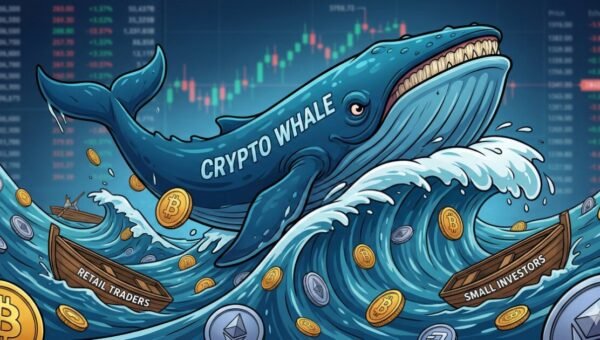
Frontrunning occurs when a searcher observes a pending swap, submits a similar transaction with higher gas fees to execute first, and profits from the price impact. Sandwich attacks involve placing a buy order before and a sell order after a victim’s trade, extracting value from the induced slippage. Backrunning involves executing trades immediately after large swaps to profit from temporary price dislocations.
Some DEXs integrate with private mempools or MEV protection services that route transactions directly to block builders in exchange for a share of extracted value or guaranteed execution order. Others implement batching mechanisms that aggregate multiple swaps into a single transaction, reducing per-user MEV exposure.
Worked Example: AMM Swap with Slippage
Assume a constant product AMM pool contains 100,000 TOKEN_A and 50 TOKEN_B, implying a price of 0.0005 TOKEN_B per TOKEN_A. You want to swap 10,000 TOKEN_A.
The pool uses the formula x × y = k, where k remains constant. Initial k = 100,000 × 50 = 5,000,000. After adding 10,000 TOKEN_A, the pool has 110,000 TOKEN_A. Solving for y: 110,000 × y = 5,000,000, so y ≈ 45.45 TOKEN_B. You receive 50 – 45.45 = 4.55 TOKEN_B.
Your effective price is 4.55 / 10,000 = 0.000455 TOKEN_B per TOKEN_A, representing 9% slippage from the pre-trade spot price. A 0.3% fee reduces the output further to approximately 4.54 TOKEN_B. The slippage grows nonlinearly with trade size: a 1,000 TOKEN_A swap would incur roughly 1% slippage under the same initial conditions.
Common Mistakes and Misconfigurations
- Ignoring slippage tolerance settings. Default slippage limits (often 0.5% to 1%) may cause large or volatile trades to revert. Raising slippage tolerance above 5% exposes you to significant MEV attacks.
- Approving unlimited token spend. Many DEX interfaces request unlimited ERC-20 approvals for convenience. A compromised contract or malicious upgrade can drain approved balances.
- Trading illiquid pairs without price checks. Low liquidity pools exhibit extreme slippage and are frequent targets for price manipulation. Always cross reference the quoted price against external sources.
- Assuming LP fees offset impermanent loss. In volatile markets, impermanent loss often exceeds accumulated fees, especially for uncorrelated or trending pairs.
- Using outdated pool versions. Protocols frequently deploy upgraded contracts with better fee structures or security fixes. Confirm you are interacting with the current canonical deployment.
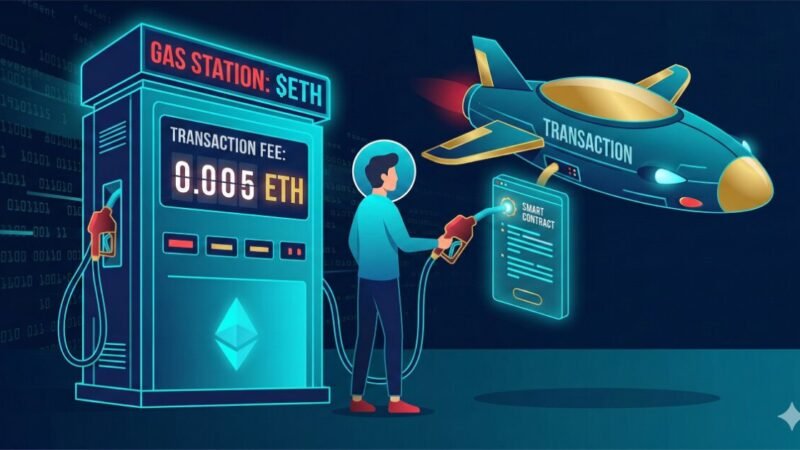
- Neglecting gas cost relative to trade size. Small swaps on Ethereum mainnet can incur gas fees exceeding 5% of trade value during congested periods.
What to Verify Before You Rely on This
- Confirm the contract addresses for the DEX router, factory, and individual pools match official documentation. Phishing sites often deploy clones with similar interfaces.
- Check the current fee tier and LP incentive structure. Protocols adjust fee parameters through governance votes.
- Review the audit history and verify that the deployed bytecode matches the audited version. Some protocols deploy unaudited upgrades.
- Confirm slippage and price impact for your specific trade size using a liquidity simulator or the protocol’s interface before signing the transaction.
- Verify the token contract addresses in the pair. Scam tokens often mimic legitimate tickers.
- Check whether the protocol has emergency pause functions or admin keys that could freeze your funds.
- Review recent governance proposals that might affect fee structures, supported assets, or liquidity mining rewards.
- Confirm the block explorer shows recent, consistent trading activity in the pool you plan to use.
- Check the protocol’s documentation for any geographic restrictions or compliance requirements.
- Verify the wallet connector interface is legitimate and matches the official repository.
Next Steps
- Execute a small test swap on a low value pair to familiarize yourself with the interface, gas estimation, and transaction confirmation flow before risking larger amounts.
- Compare effective execution prices across multiple DEXs and aggregators for your target pair. Route optimization can reduce slippage by several percentage points on large trades.
- If providing liquidity, model impermanent loss scenarios using historical price data for your chosen pair and compare projected fee income against passive holding returns.
Category: Crypto Exchanges